

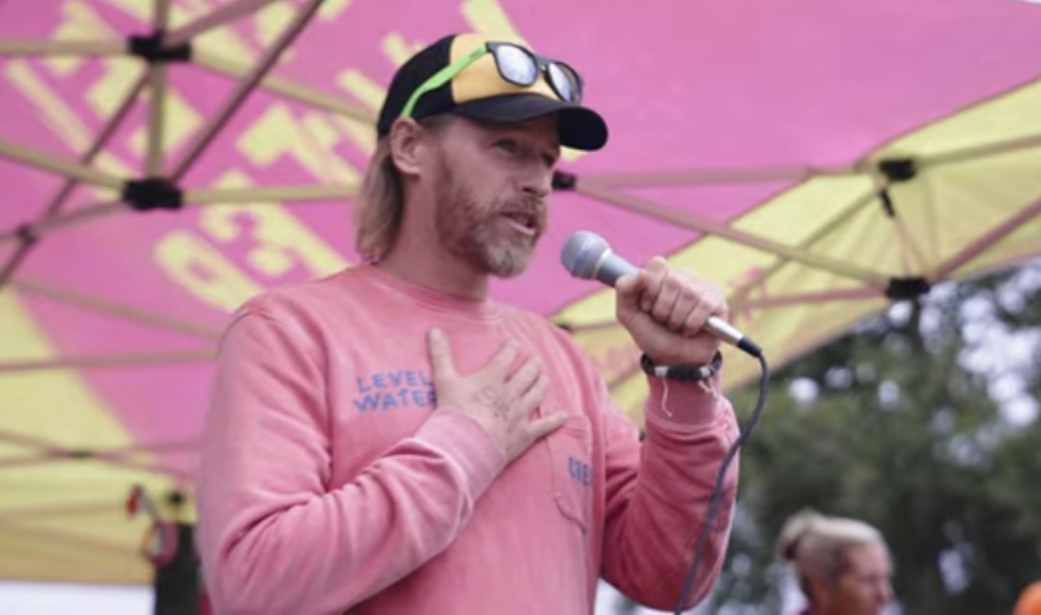
Ian Thwaites went from competitive swimming to investment banking to founding Level Water, a charity that teaches disabled children to swim. Today, Level Water reaches 1,500 children a week across 250 pools in the UK and raises over £1 million annually through challenge events.
The best ideas happen in pubs. Our founding chairman and I were literally sitting in a pub chatting about what sport meant to us growing up. We just agreed that we wanted to help more kids have that opportunity. When we saw what a complete market failure there was around getting disabled kids active, it seemed like an obvious place to start. Neither of us had any connections to the disabled world, but it was a problem that was so obviously wrong and so fixable.
Swimming isn’t just another sport – it can save your life. We did six months of research. Disabled children most want to do swimming by a really long way. Swimming is completely unique. Football can’t save your life. The water takes your weight – pain is gone, mobility improves, strength improves. Our kids fall less and do better at their physio. Long term, it becomes an access tool for everything else. You have to be able to swim to play in the sea, paddle board, surf. All this world of opportunities is locked to you if you’re not safe in water.
Run your charity like a startup, not a charity. Early on, I swam the Dart 10K and approached the organisers for tickets. They said no. We asked again. Eventually they gave us 20 tickets. I could have sold 120 overnight. That was a huge clue. We weren’t just a charity, we were a startup. The other charities were buying tickets and sending an email to their list. We bought the tickets and took out Facebook adverts. When you spend five pounds on advertising and make four or five hundred pounds on fundraising, you do it as many times as you can.
When you own the event, the economics are transformative. We bought the Outdoor Swimming Society’s events company. The charity paid £300,000 to acquire it, and we raise about half a million pounds a year from those events. Private events companies make £50,000 a year profit on their events. With the fundraising, we’re making £500,000. We can spend more on marketing, do a better job of branding and customer experience.
Unrestricted income means you never close a programme. Having event-led revenue means we have never in 13 years shut down a programme, closed a swimming pool, or taken a kid out of their lessons. If you see challenge events in comparison to grant funding, we’re not competing for a closed pot of money. We’re bringing new money into the charity world. It’s our money. We can do what we want with it.
Invest heavily in the ideas that show promise. The biggest thing I’d do differently? We launched 12 events that didn’t work alongside the two that did. Four or five had good six-figure fundraising potential and we just didn’t launch them right. We had an idea, made a logo, promoted it a bit. We probably put in £5,000 and six weeks of part-time effort.
We’ve now created a stage-gated innovation process. First step: spend one day and up to £1,000 finding three people outside the charity who say it’s got legs. Then £5,000 in six weeks doing something quick to see if people will actually pay. Then £50,000 over six months. We’re looking at a product now that will cost £50,000 a year for three years to get started, because we think it’s got the potential to raise £1 million pounds a year.
It doesn’t take that many people to change the world. This is the little niche I’ve dedicated my life to. If somebody else works on education or football or ethnic inclusion, it doesn’t take very many people doing a really good job of a niche and suddenly everything gets quite a lot better. We genuinely believe we are on a path to solving this problem nationally. We’re about five or 10 per cent of the way there. If we can quadruple in the next five years, we’re looking at being 20 or 30 per cent of the way there. It can be done.
—
Cause & Effect is a series from Hope, a charity branding agency, in which leading figures who have been involved in building and promoting good causes tell us what they’ve learned from their experiences. Interview by Michael Isaacs.